

Garmin epix Pro Gen 2 Sapphire 47mm
Built-in flashlight adds real convenience for night training and quick tasks. The feature set is deeper than casual smartwatch buyers usually need.
Best overall: Garmin epix Pro Gen 2 Sapphire 47mm. We compared 5 smartwatches using current price, editorial assessment, and buyer feedback.
The ranking weighs current price, editorial assessment, useful technical data, and buyer feedback.
Built-in flashlight adds real convenience for night training and quick tasks. The feature set is deeper than casual smartwatch buyers usually need.

Strong battery life that reduces charging friction. Not the best choice if you want a phone-like wrist experience.
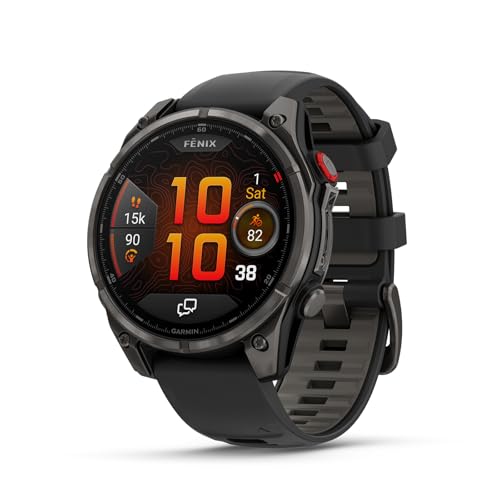
Built-in inReach and LTE support for messaging, calls, LiveTrack, and SOS The price is high for buyers who will only use basic smartwatch functions
| Garmin epix Pro Gen 2 Sapphire 47mm | 1.3 Inches | Up to weeks of battery life in smartwatch mode | 9.0 | 8.0 | $581.49 |
| Apple Watch Ultra 2 GPS Cellular 49mm | 49 millimeters | Up to 36 hours of normal use | 8.6 | 8.0 | $512.30 |
| Samsung Galaxy Watch 8 (2025) | 1.47 Inches | improved battery with long-lasting charge | 8.8 | 7.9 | $329 |
| Garmin Vívoactive 5 | 1.2 Inches | Up to 11 days in smartwatch mode | 8.3 | 7.0 | $219.99 |
| Garmin fenix 8 Pro 51mm AMOLED Sapphire | 1.4 Inches AMOLED touchscreen | Up to 27 days in smartwatch mode | 8.3 | 8.9 | $1,190 |
Garmin epix Pro Gen 2 Sapphire 47mm wins on Batería y carga and Buyers; the final gap is 0.5 points over 100.
Apple Watch Ultra 2 GPS Cellular 49mm pushes back on Actividad física y salud and Compatibilidad con el móvil, but it does not offset the overall score gap.
Garmin epix Pro Gen 2 Sapphire 47mm stays first because it combines the ranking score, current price, and comparable category signals better than Apple Watch Ultra 2 GPS Cellular 49mm.
Garmin epix Pro Gen 2 Sapphire 47mm wins on Ranking score and Batería y carga; the final gap is 14.6 points over 100.
Samsung Galaxy Watch 8 (2025) pushes back on Actividad física y salud and Price value, but it does not offset the overall score gap.
Garmin epix Pro Gen 2 Sapphire 47mm stays first because it combines the ranking score, current price, and comparable category signals better than Samsung Galaxy Watch 8 (2025).
Garmin epix Pro Gen 2 Sapphire 47mm wins on Ranking score and Price value; the final gap is 30.0 points over 100.
Garmin fenix 8 Pro 51mm AMOLED Sapphire pushes back on Actividad física y salud and Batería y carga, but it does not offset the overall score gap.
Garmin epix Pro Gen 2 Sapphire 47mm stays first because it combines the ranking score, current price, and comparable category signals better than Garmin fenix 8 Pro 51mm AMOLED Sapphire.
Garmin epix Pro Gen 2 Sapphire 47mm wins on Ranking score and Batería y carga; the final gap is 21.9 points over 100.
Garmin Vívoactive 5 pushes back on Actividad física y salud and Price value, but it does not offset the overall score gap.
Garmin epix Pro Gen 2 Sapphire 47mm stays first because it combines the ranking score, current price, and comparable category signals better than Garmin Vívoactive 5.
If you want a premium training watch that can pull double duty as an everyday smartwatch, the Garmin epix Pro Gen 2 Sapphire 47mm makes sense fast. The 1.3-inch AMOLED display, sapphire lens, titanium bezel, built-in flashlight, and strong battery reputation give it a clear edge for runners, hikers, and outdoor-focused buyers who want a watch that stays useful after dark and away from the charger. The trade-off is just as clear: this is a serious, feature-heavy watch, so it is a better fit for people who will use the training and navigation tools than for anyone who mainly wants simple notifications.

If you want an iPhone-first smartwatch that can handle workouts, calls, and weekend wear without feeling delicate, the Apple Watch Ultra 2 makes a strong case. The 49mm titanium case, dual-frequency GPS, cellular support, and up to 36 hours of normal-use battery life give it a clear edge for active buyers, but the size and price keep it from being the easy default for everyone.

If you want a smartwatch that feels most natural on a Samsung or Android phone, the Galaxy Watch 8 makes a strong case with its 44mm size, bright 1.47-inch display, built-in GPS, and health-first feature set. It is aimed at buyers who want sleep coaching, running guidance, heart-rate tracking, and quick daily glanceability without moving up to a bulkier LTE or outdoor-focused watch.
If you want a fitness-first smartwatch that stays readable all day and does not turn charging into a daily chore, the Garmin Vívoactive 5 makes a strong case. Its bright 1.2-inch AMOLED screen, built-in GPS, and up to 11 days of battery life line up well for someone who wants sleep, workouts, and health tracking without the constant plug-in routine that pushes many people away from smartwatches.
If you want a serious training watch that can also leave the phone behind, the fēnix 8 Pro makes a real case for itself with built-in inReach connectivity, LTE calling and messaging, and Garmin’s familiar multisport toolkit. That combination matters most for runners, climbers, riders, and outdoor athletes who care about staying reachable without carrying a phone, but the trade-off is clear: this is a large, expensive watch with subscription-dependent features that only make sense if you will actually use them.
The ranking compares published products with a stable framework: editorial quality, buyer signals, current price when the preset requires it, and comparable category metrics. It does not claim original lab testing; it documents how available signals are weighted so the order remains auditable.
Setup: Collect published reviews, current product data, and comparable technical fields.
Measured variable: Coverage for current price, rating, local review URL, and primary category metrics.
Evaluation rule: Only updated products with enough comparable data can enter.
Setup: Cross editorial score, buyer signals, and price when the preset requires it.
Measured variable: Normalized ranking score on a traceable 0-100 scale.
Evaluation rule: The winner must sustain a stronger balance than the finalists, not just one isolated metric.
This ranking is refreshed from published reviews, current category catalog signals, editorial scoring, and current price. Scores are calculated against the eligible category universe; the visible top only shows the models that pass the final cut.
Descending order: the winner has the strongest balance of Q_final and normalized price against the eligible category universe.
Buyer signal uses the scoring v2 Bayesian score; it is not a simple stars times two conversion.
Computed against eligible comparable category candidates, not only against the visible top. P05=241.792; P95=1068.298.
If a critical axis falls below the threshold, final quality is penalized so one weak product cannot win only on price.
It does not mean choosing the cheapest product by default. The ranking crosses editorial score, buyer satisfaction, useful technical data, and updated price to identify the model with the most defensible balance.
The page prints the latest available refreshed price to make comparison clearer, but Amazon can change price and availability at any time. The live purchase link remains the final check before buying.
Yes. The preset ranking keeps the editorial frame, URL, and components stable while recalculating internal positions when comparable data changes or new models enter the catalogue.
The ranking is not meant to list the whole catalogue. A model first needs a published review, a current price, and comparable signals; then only the set that clears the operational cut is ordered. A product can stay outside the visible top when its price is stale, it has no public URL, its useful data is incomplete, or its balance of quality, user signal, and price remains weaker. This keeps the same freshness gate used across the rest of the site.